

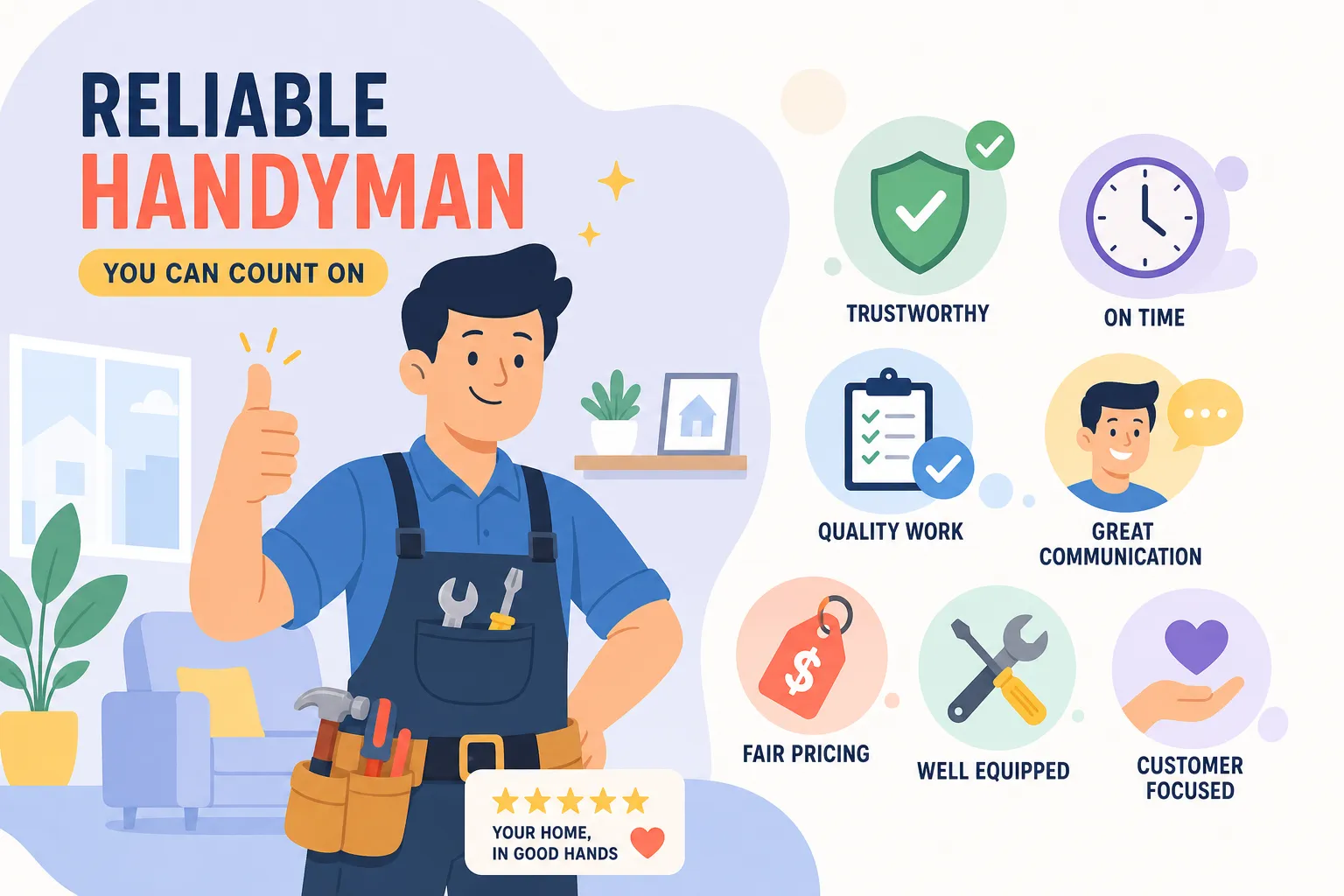
If you need reliable handyman services, knowing exactly what to look for before hiring makes all the difference. You hired someone to fix a leaking pipe. He showed up two days late, charged $200 more than the estimate, and the leak came back within a week. Sound familiar? This is the pattern most homeowners only recognize after living through it, and by then the damage is done, literally and financially.
Most people searching for a handyman near me default to the first result, the cheapest option, or whoever a neighbor mentioned once. That approach works until it doesn’t. As co-owner of Apaga Handyman Services, I’ve spent over a decade building a reputation in South Florida by getting the fundamentals right every single time. The calls we get most often start with “I hired someone else first.”
This article breaks down the seven qualities that separate truly reliable handyman services from a risky hire. Each quality is backed by what we see on the ground in Miami-Dade, Broward, and Palm Beach, and by the real experiences of clients who found out what these qualities mean in practice.
1. Credentials that protect you: licensing, insurance, and compliance
What verified licensing and insurance actually mean for a homeowner
Licensing isn’t just a checkbox on a website. In South Florida, the type of work being done determines what credentials are actually required. Minor repairs and painting generally fall outside licensed contractor territory, but once a job touches electrical systems, plumbing, HVAC, or structural elements, Florida law requires the appropriate contractor license under Chapter 489 of the Florida Statutes. Miami-Dade County adds a layer on top of that, requiring county registration or a competency license for specialty trades, separate from state licensing, a distinction that trips up even experienced property managers. For a plain-language overview of common handyman license requirements, a short guide like this can help clarify which jobs need which credentials.
The two insurance policies that matter most are general liability and workers’ compensation. General liability covers damage to your property during the job. Workers’ comp protects you if a worker is injured on your property and the contractor doesn’t carry coverage. Before any work begins, ask for a current certificate of insurance and verify that the business name on the document matches the name on the estimate. If those don’t match, stop and ask why.
At Apaga Handyman Services, we carry both policies and clients can request proof upfront before any work begins. That’s not a selling point; it’s the baseline every legitimate handyman contractor should meet.
Customer story: “I finally felt like I wasn’t taking a risk”
Maria, a property manager overseeing six rental units in Doral, called us after a previous contractor couldn’t produce an insurance certificate on the day of the job. “Apaga sent the certificate before I even asked for it,” she said. “That told me everything I needed to know.” Knowing the paperwork is clean before anyone touches a wall is what professional property management actually requires.
2. Pricing transparency for reliable handyman services
Flat-rate vs. hourly: why clarity upfront changes everything
National handyman rates in 2026 run about $60 to $75 per hour on average, with flat-rate jobs commonly landing between $193 and $379 for standard tasks. For a recent snapshot of typical handyman prices, marketplace data can help homeowners set realistic expectations. The issue is never the number itself. The problem is when the number changes after the job is done. Hourly pricing creates anxiety, and for good reason: customers watch the clock instead of the quality of the work.
A trustworthy estimate covers scope, exclusions, material costs, assumptions, and what triggers a change order. Without those elements, you’re agreeing to something you can’t actually evaluate. Apaga uses a flat-rate estimate model, which means the number on the quote is the number on the invoice, unless the scope changes and you’ve approved that change in writing first. No surprises. If you’d like to read a deeper comparison of flat-rate vs hourly approaches, industry analyses explain why many companies prefer flat-rate pricing for transparency and customer confidence.
Customer story: “No surprises, just the number they quoted”
Carlos, a real estate investor in Pembroke Pines, had a frustrating experience with a previous handyman who billed $300 more than the verbal quote for a bathroom repair. “When Apaga sent the written estimate, every line was there,” he said. “We paid exactly what they quoted.” That single experience is why he’s been calling us for two years since.
3. Response time and reliability: showing up is half the job
What fast response actually looks like in the real world
In South Florida’s climate, a slow response isn’t just inconvenient. A delayed repair on a leak or a humidity-related issue can substantially escalate remediation costs, what starts as a manageable fix can multiply several times over once mold or structural damage sets in. Every day a landlord waits for a repair is a day closer to a tenant complaint, a code notice, or a lost rental.
A reliable handyman communicates clearly about availability, shows up on schedule, and updates the client if anything changes before arrival. That sounds basic because it is, but it’s also where most complaints originate. At Apaga, we handle both standard scheduling and urgent repair calls with the same structured workflow: a confirmation text, on-time arrival, and a status update if anything shifts. Responsiveness commonly correlates with professional reliability, it signals how a contractor treats your time and your property before the first tool comes out.
Customer story: “They were there the next morning”
James, a landlord with properties in Hialeah, called us after a tenant reported water coming from under the bathroom vanity at 7 p.m. on a Wednesday. “I sent the details that evening and they were at the unit the next morning by 8,” he said. “Tenant was happy. I didn’t lose a day of rent.” That kind of turnaround isn’t luck. It’s a system.
4. Reviews and reputation: reading between the lines
Which platforms give you the most honest picture
Not all review platforms carry the same weight when you’re vetting a handyman company near you. BBB is a strong tool for checking complaint history and seeing how a business resolves disputes. Angi is home-service specific, with reviews from verified homeowners tied to actual projects. Thumbtack is also useful because its reviews are linked to completed jobs, which makes the feedback harder to fake or inflate. For a recent comparison of the best review sites for home contractors, that roundup can help you decide which platforms to trust most for your market.
Star ratings alone tell you very little. What matters more: review volume, recency, and how the contractor responds to negative feedback. A business with 200 reviews and two thoughtful responses to complaints tells a very different story than a business with 10 reviews and no engagement at all. Apaga’s ratings across Google, Angi, and BBB reflect years of consistent work across South Florida, not a few good weeks.
Customer story: “The reviews matched the experience perfectly”
Diana, a first-time homeowner in Boca Raton, found Apaga through a Google search and spent 20 minutes reading reviews before calling. “Everything people said about communication and showing up on time was exactly what I experienced,” she said. “The reviews were honest, and the job matched.” That consistency between what’s written and what’s delivered is how reputations are built over years, not marketing campaigns.
5. A written guarantee: the quality most homeowners skip
What a solid workmanship warranty covers and how to document it
Many reputable handyman companies offer a written workmanship warranty covering labor defects, commonly around one year from the job completion date, though terms vary by contractor and scope. Always verify the written term before work begins. This is separate from manufacturer warranties on materials, which are handled by the product supplier, not the contractor. The key word is written: verbal guarantees don’t protect you when someone stops returning calls six months later.
A proper warranty document should state the duration, the start date, what’s covered, what’s excluded (typically caulking, pre-existing damage, wear from misuse), and the exact process for submitting a claim. Always ask for warranty terms in the written contract before the job starts. Apaga provides workmanship documentation before any job is finalized, and clients know exactly how to request a callback if anything doesn’t hold up.
Customer story: “They came back and fixed it, no questions asked”
Robert, a homeowner in Coral Springs, noticed a painted exterior section bubbling four months after the job. He called us, and we were back within the week to address it. “No argument, no runaround,” he said. “They just showed up and made it right.” That’s what a guarantee looks like when it’s actually backed up.
6. A clear scope of work and honest communication
How scope gaps turn small jobs into expensive disputes
Before anyone picks up a tool, a trustworthy handyman defines exactly what the job includes and what it doesn’t. Scope gaps are where most disputes start: the client assumed the quote covered the ceiling patch, the contractor assumed it only covered the drywall seam. Both walked away from the estimate conversation thinking they were on the same page.
Ask directly: what is excluded from this quote, and what would trigger a change order? A contractor who answers that question clearly and without hesitation is one who’s done this long enough to know where the trouble usually hides. At Apaga, every estimate spells out the scope, the assumptions, and the change-order process before any work is approved. Communication isn’t a soft skill here; it’s operational.
Customer story: “No surprises on the invoice”
Sandra, a condo owner in Fort Lauderdale, had been burned before by a contractor who added line items after the job was done. “Apaga walked me through every part of the estimate before they started,” she said. “When the invoice came, it matched exactly what we talked about.” A clearly written scope isn’t bureaucracy, it’s what separates a smooth job from a billing argument.
7. Local expertise that fits your specific market
Why South Florida experience changes what reliable handyman services look like
South Florida’s combination of humidity, salt air, aging infrastructure, and strict code requirements creates conditions that generic national companies aren’t built for. A contractor who works in this environment every day understands why certain materials fail faster here, which permits are required for which jobs, and how HOA compliance intersects with repair timelines.
Local expertise shows up in small ways: recommending a mold-resistant paint formula for a coastal property, knowing which Miami-Dade inspectors require documentation for certain repairs, or understanding why a roof penetration in Broward needs a different approach than it would in a drier climate. That knowledge reduces your exposure to rework, failed inspections, and preventable callbacks.
Customer story: “They knew the code requirement before I even asked”
Tony, a property owner in Aventura, needed a repair that touched an exterior wall on a building with active HOA oversight. “Most contractors I called weren’t sure about the permit,” he said. “Apaga told me exactly what was required and handled the documentation.” That kind of market-specific knowledge isn’t something you find in a national directory. It comes from years of working the same counties, the same codes, and the same inspectors.
Why South Florida property owners keep calling Apaga back
How these 7 qualities show up in every job
Finding reliable handyman services near you isn’t about luck. It’s about checking these seven qualities every single time: verified licensing and insurance, transparent flat-rate pricing, fast and dependable response, strong verified reviews, a written workmanship guarantee, clear scope communication, and genuine local expertise. A contractor who checks all seven boxes isn’t common. That’s the point.
Apaga Handyman Services was built around every one of these standards from day one. Beyond individual repairs, we also offer tiered maintenance plans, including CoreShield, TurnKey48, FullGuard, and Reset365, designed to keep South Florida properties in top condition year-round and reduce the cost of emergency repairs over time. Whether you own one property or manage twenty, the approach is the same: licensed, insured, documented, and on time.
The next step if you’re looking for a trusted local handyman
If this list gave you a clearer picture of what to look for, the next move is straightforward: request a flat-rate estimate from Apaga. We serve Miami-Dade, Broward, and Palm Beach counties, and the first call costs nothing. You’ll get a written scope, a firm number, and a team that shows up when scheduled. Reach out to Apaga Handyman Services today and put the list to work.
The difference comes down to seven things
A frustrating handyman experience and a smooth one are separated by exactly what’s on this list:
- Licensing and insurance protect your home.
- Transparent pricing protects your budget.
- Fast response protects your time.
- Verified reviews protect your judgment.
- A written guarantee protects the work itself.
- A clear scope protects against surprises.
- Local expertise protects your investment from the specific risks of this market.
When a handyman company checks all seven boxes, you stop guessing and start getting things done. Reliable handyman services in South Florida don’t have to be hard to find. If you’re ready to hire an affordable handyman with a proven track record, contact Apaga Handyman Services and get a free flat-rate estimate, no obligation, no surprises.
Leave a Reply