
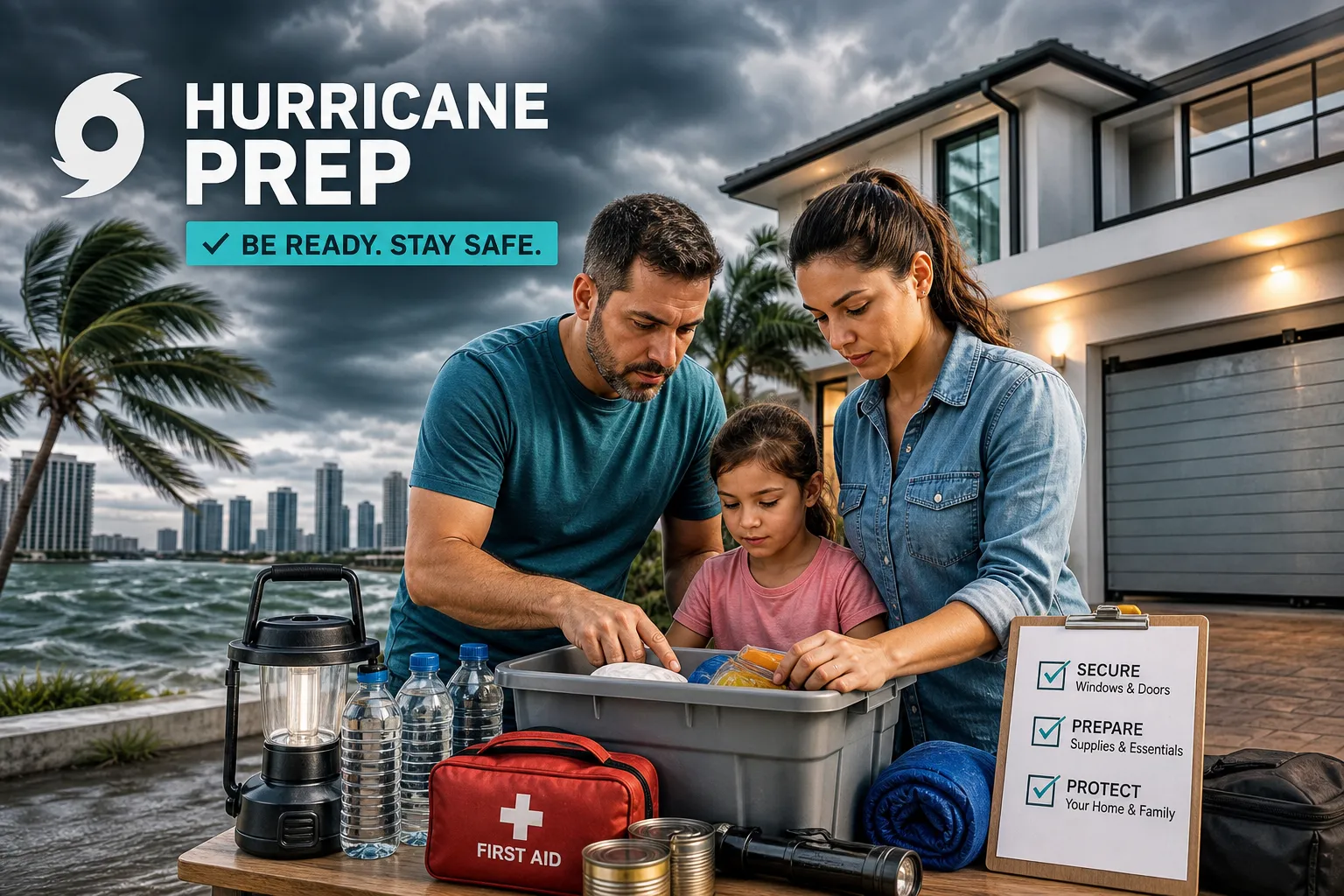
Hurricane season home prep in South Florida isn’t optional, it’s a deadline-driven discipline. The season runs June 1 through November 30, and many homeowners delay preparations until a storm is already named and spinning in the Atlantic. That delay is expensive. Emergency contractor rates can surge significantly when a named storm is within 72 hours. Hardware stores routinely sell out of plywood, shutters, and generators in pre-storm periods. And preventable structural damage, a blocked drain here, a loose roof vent there, can turn a manageable event into a catastrophic insurance claim.
The good news: a structured pre-season checklist eliminates most of that risk. Homeowners enrolled in Apaga Handyman Services’ CoreShield or FullGuard seasonal maintenance plans receive a pre-hurricane property walkthrough scheduled automatically each spring, so the structural side of this list is handled before June arrives. For everyone else, this guide covers six core areas: home hardening, outdoor and drain prep, emergency supplies, insurance and documentation, backup power, and evacuation planning. Think of it as a “by when” checklist, not a “what if” one.
Hurricane Season Home Prep: Hardening Windows, Doors, and Your Roof
Window protection comes in three tiers, and choosing the right one depends on your budget and timeline. Permanent impact-resistant glass, rated for 250-mph winds, is the gold standard. It shatters on impact but stays in the frame, keeping the building envelope sealed and preventing the interior pressure buildup that tears roofs apart. Engineered storm shutters mounted directly to framing are the next tier, and CDX plywood at a minimum of 5/8-inch thickness, anchored into wall framing (not trim), works as a last resort. Standard OSB and thin plywood fail under missile impact testing; glass film alone will not prevent penetration under sustained wind loads.
The garage door is one of the most overlooked entry points on a residential property, and its failure is widely linked to significant roof damage during hurricanes. Standard residential doors are not engineered to withstand high wind loads, and many fail well before Category 1 conditions. If replacing with an impact-rated unit isn’t in the budget, retrofit vertical bracing kits are a code-compliant middle option. For other exterior doors, replace short hinge screws with 3 to 4-inch fasteners anchored into the framing, install heavy-duty deadbolts, and add a door brace to resist inward movement.
Roof Hardening: The Continuous Load Path
Hurricane straps and clips create the continuous load path that keeps a structure standing: roof trusses connect to wall framing, which connects to the foundation. Without that connection, high wind loads lift the roof cleanly off the walls. A secondary water barrier, a self-adhering membrane installed beneath the primary roofing material, prevents water intrusion when shingles or tiles are lost.
Schedule a professional inspection before the season opens to confirm strap installation, sheathing thickness, and the condition of vents and gable ends. In Miami-Dade and Broward counties, all materials must carry a Notice of Acceptance (NOA) under Florida Building Code High Velocity Hurricane Zone standards. See the local Miami-Dade hurricane shutter code and NOA requirements when planning permanent or retrofit protections.
Clearing Your Property, Drains, and Outdoor Spaces
South Florida’s flat terrain, high water table, and tropical rainfall rates create a specific flooding risk: a clogged drain can overwhelm a yard in minutes. Walk the entire property and clear roof gutters, downspout extensions, driveway drains, and French drains before June. Blocked drainage can rapidly cause significant interior flooding and water damage, and clearing it costs nothing before the season compared to the remediation bill after.
Unsecured patio furniture becomes airborne debris at 74 mph, the minimum wind speed for a Category 1 storm. The rule is straightforward: lightweight chairs, potted plants, and umbrella stands come inside or go into a locked storage area. Heavy furniture with anchor tie-downs can stay, but anything that moves freely needs to be secured or removed before a storm arrives. Overhanging tree limbs, dead palms, and aging wood fences represent additional structural risk and should be trimmed or reinforced no later than May.
Landlords and HOA-managed properties carry an extra layer of preparation that single-family owners often skip. All common-area maintenance should be documented before the season opens. Property records should be digitally backed up, and the HOA’s hurricane action plan confirmed as current. Post-storm insurance claims on multi-unit properties are significantly harder to process without pre-storm digital reports on file. Apaga’s FullGuard maintenance plan includes full property walkthroughs with a digital inspection report, which satisfies exactly this documentation requirement for landlords and HOA boards.
Hurricane Season Home Prep: Stocking an Emergency Supply Kit
The commonly repeated standard, three days of supplies, is evacuation-only thinking. Many home-preparedness guides, including resources from organizations like the Red Cross, recommend a two-week supply because power and water access in South Florida after a major storm can be disrupted for days to weeks, not hours. Store one gallon of water per person per day, with a two-week target. Stock non-perishable, easy-to-prepare food that requires no refrigeration, include a manual can opener, and rotate stock every six months to keep it fresh. For a practical shopping checklist, see a comprehensive hurricane supply list that outlines essentials and suggested quantities.
Prescription medications need a minimum seven-day supply stored in watertight containers, with a copy of the prescription included. The medical portion of the kit should also include first aid basics: antiseptics, pain relievers, disinfectant wipes, and hand sanitizer. Special-needs planning matters here, infants need formula and diapers, elderly household members may require additional water, and pets need their own one-week food and water supply. Don’t leave this list until a storm is named; local stores sell out quickly in pre-storm periods, and restocking options become limited fast.
Protecting Your Insurance Coverage and Property Documentation
Pull your homeowners insurance declarations page before June 1 and review three things: coverage limits against current replacement cost (not market value), listed exclusions and deductibles, and whether a National Flood Insurance Program (NFIP) policy is active if your property sits in a flood zone. The NFIP has a hard 30-day waiting period, meaning policies purchased after a storm is named do not cover that storm. The enrollment deadline for hurricane season coverage is May 1. If you can’t locate your declarations page, contact your insurer or broker directly to request a current copy. Read more about the waiting period for flood insurance so you don’t assume last-minute purchases will help.
A home inventory that holds up at claim time requires a room-by-room approach: walk each room with your phone camera, open drawers and closets, and narrate the make, model, serial number, purchase date, and estimated replacement cost for every significant item. Store the inventory outside the home, cloud storage, a relative’s house, or a secure digital platform. A home destroyed by a hurricane takes paper records with it. Receipts and photos for major purchases and recent home improvements belong in that same file, updated annually.
In the first 24 hours after storm damage, photograph all visible damage before making any temporary repairs, and keep every receipt for emergency work: tarps, board-up services, water extraction. The claim file also needs a written description of what happened and when, a copy of the adjuster’s inspection report, repair estimates from two or three licensed contractors, and proof of temporary living expenses if the property is uninhabitable. Documenting before you repair is non-negotiable. Adjusters cannot assess damage they can’t see.
Generator and Backup Power Rules Every Homeowner Needs to Follow
Carbon monoxide is odorless and reaches fatal concentrations inside a home in minutes. Generators must run outdoors, at least 20 feet from doors, windows, and vents, with exhaust directed away from the structure. In wet conditions, use a generator-specific storm shield or tent that maintains airflow while protecting the unit from rain. Never operate a wet generator. For authoritative generator safety guidance and CO precautions, consult expert recommendations before you buy or operate a unit. Install battery-operated or hardwired CO alarms with battery backup before the season starts, and test them before June 1.
Plugging a generator directly into a wall outlet is illegal and creates a backfeed risk that can electrocute utility workers restoring power to your neighborhood. The correct approach is a professionally installed manual transfer switch or interlock kit that isolates your home’s electrical system from the grid before the generator is connected. For fuel safety, refuel only after the engine has cooled completely, store gasoline in ANSI-approved containers in a cool and ventilated space separate from the home, and use a fuel stabilizer for any stored supply that will sit unused between storms.
Building a Household Evacuation Plan Before the Season Opens
South Florida residents can find their official evacuation zone at floridadisaster.org/knowyourzone. Enter your address and the tool returns a zone designation from A through F. Zone A properties are evacuated first and may receive an evacuation order during a Category 1 storm that leaves Zone D neighbors untouched. Local officials issue orders by zone, not by storm category, so knowing your zone now removes the single biggest source of confusion when a storm approaches.
A go-kit needs to be ready before a storm is named. Pack the essentials: government-issued ID, medications, cash, a phone charger, insurance documents, and at least three days of water and food. Plan a primary evacuation route and a secondary route that accounts for traffic and road flooding. Confirm in advance whether your destination, family, hotel, or public shelter, accepts pets. Households without a vehicle should pre-register for county-run evacuation transportation through local emergency management programs.
A plan that has never been tested is not a plan. Run a walkthrough drill before June 1 each year: time how long it takes to gather the go-kit and leave, then drive the evacuation route to confirm it’s accessible. Register for county emergency alerts and the Genasys Protect system (genasys.com/protect) for real-time zone status during active storm events. Update the plan annually after any change in residence, household size, or medical needs.
Get Your Property Ready Before the Season Clock Starts
Complete your hurricane season home prep before June 1, not after a storm is named. Six areas, one deadline: home hardening, outdoor and drain prep, emergency supplies, insurance documentation, backup power safety, and an evacuation plan. Starting in March or early April gives you the contractor availability and material lead time that May simply doesn’t allow.
For South Florida homeowners and landlords who want the structural side of this hurricane preparedness checklist handled by licensed professionals, Apaga Handyman Services’ CoreShield and FullGuard maintenance plans include a pre-season property inspection, digital documentation for insurance purposes, and rapid post-storm response. You go into every season with both the physical property and the paperwork side covered, and with a team that already knows your home.
Reach out to Apaga before the season opens to schedule your property walkthrough and get your home hurricane prep report on file. One conversation now is worth far more than an emergency call after the storm makes landfall.