

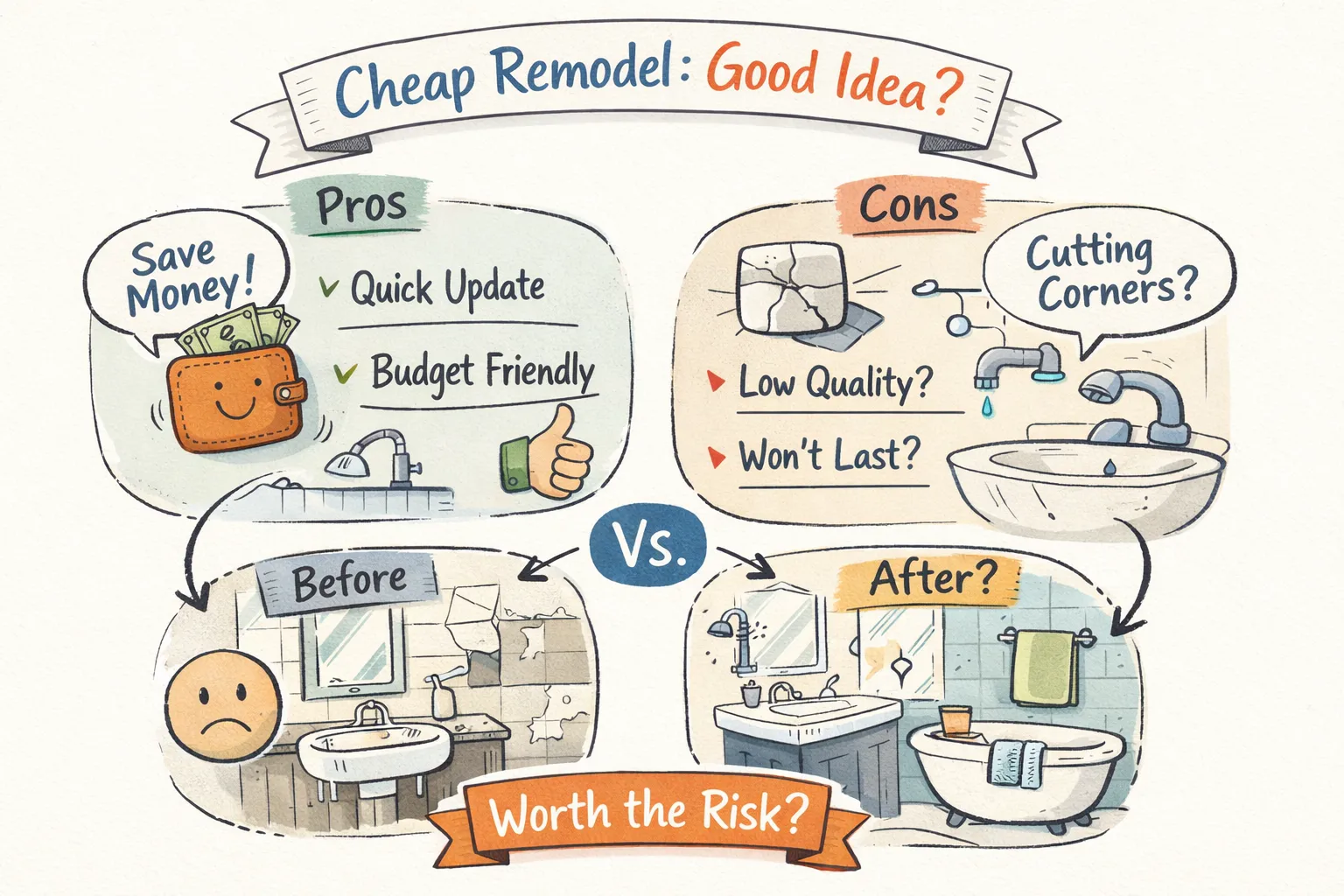
At first glance, the cheapest bathroom remodel can look like smart saving, but low bids often hide costs that push the final invoice far higher. Use the checks below to avoid those common pitfalls and protect your budget.
Key takeaways
If you need a quick checklist to compare bids, start here. These items focus on costs and contract clarity so you avoid surprise invoices and delays.
- Hidden costs matter: the cheapest bathroom remodel bids often exclude disposal, permits, subfloor or water-damage repairs; include those items in comparisons to avoid surprise final invoices.
- Set a contingency: protect timeline and cash flow with at least 10% contingency and 20% for older homes or layout changes.
- Verify the scope: insist on an on-site inspection and a written, itemized scope with a labor breakdown and permit responsibility before you sign.
- DIY selectively: save on low-risk tasks like demo or painting, but hire licensed professionals for plumbing, electrical, and structural work to prevent failed inspections and rework.
- Choose lasting materials: opt for mid-range, long-life options such as LVT, ceramic tile, and quality fixtures to lower long-term maintenance and replacement costs.
Why the cheapest bathroom remodel often costs more
A bid that looks too low usually hides trade-offs. Contractors sometimes submit a tempting number to win work, then pare back the scope or substitute lower-quality materials to stay profitable. That approach makes the cheapest bathroom remodel expensive over time, especially for rental units or properties where durability and code compliance matter.
Common low-bid tactics include vague scopes, no labor breakdown, and omitted permit or disposal fees. A low estimate may list only fixture installation while leaving demo disposal, subfloor repair, or permit costs off the page; those missing items become owner expenses once demo starts. Typical surprises after demo include:
- Water damage and subfloor repair: $300–$5,000
- Mold remediation: $500–$5,000+
- Permit fees and corrections: $200–$1,500
Labor is a large part of the tab, usually 40–65% of the total, so cheap materials plus extra labor add up quickly. For landlords and investors, the lowest price risks downtime, failed inspections, tenant disruption, and higher long-term maintenance costs. Build a contingency of at least 10%, and plan on 20% for older homes or layout changes.
Common hidden costs and how much they add
Demo often exposes the biggest risks to budget and schedule. Rotten joists or framing repairs typically run $500 to $3,000 depending on access and extent, while subfloor replacement averages about $6 to $12 per square foot; in a 30-square-foot bath that is roughly $180 to $360 for materials, plus labor. Concealed leaks and mold remediation commonly add $1,000 to $4,000, which can push a mid-range small-bath project into full-remodel territory. For guidance on typical mold remediation costs and what drives them, see mold remediation cost estimates.
Permits and inspections add predictable but often overlooked fees. Plumbing or electrical permits usually range from $100 to $1,200 depending on the municipality, and failed inspections or code rework from a cut-rate contractor can tack on $500 to $3,000 in corrective labor and delays. Cheap material substitutions and shipping delays also create hidden time and labor costs; substituted tile or fixtures can cause one- to two-week delays and $200 to $1,000 in added labor or expedited shipping. If you plan for the cheapest bathroom remodel, set aside about 20% for hidden costs and insist on a materials spec list in the contract.
Real sample budgets: under $2,000, under $5,000, under $10,000
Below are three realistic budgets that match common goals for small bathrooms. Each example assumes no major plumbing moves and is geared toward keeping costs predictable. Use these as a starting point for conversations with contractors and to set realistic contingencies. For a deeper look at planning and options specific to compact layouts, consult this small bathroom remodeling guide.
Under $2,000 is the absolute cheapest realistic option for a small powder room or a 25–35-square-foot bath with no plumbing moves and some DIY work. The sample line-items below show how to get a clean, inexpensive update without changing the layout. This level covers paint, a budget vanity, a simple floor, and minor hardware swaps.
- Paint: $150
- Budget vanity: $250
- Faucet: $80
- Toilet: $150
- Peel-and-stick LVT: $250
- Mirror/hardware: $150
- Misc/cleanup: $200
Total ≈ $1,230. Add 10% contingency for unseen issues and factor in disposal or permit fees if applicable. If you’re unsure about the cost of vanity installation in your area, check average vanity installation costs to refine your budget.
Under $5,000 works when you hire pros for fixture swaps and choose a basic shower surround or tub refinishing. This level keeps labor professional while remaining economical and is a good middle ground for rental turnover or value-focused updates. The items below balance mid-range fixtures with pro installation to limit rework.
- Mid-range vanity + install: $900
- Faucet/toilet: $350
- LVT floor install: $350
- Acrylic shower kit: $800
- Labor/plumbing: $1,500
- Paint/lighting: $300
Total ≈ $4,200. Plan a 10–15% contingency for surprises.
Under $10,000 buys a mid-range refresh that fixes worn tile, a failing tub, or minor plumbing moves. Expect demo, retiling or a tub swap, and modest electrical upgrades for a low-cost makeover that increases function and value. This budget generally includes professional labor and short plumbing adjustments to reduce future maintenance.
- Demo/disposal: $600
- Re-tile or mid-range shower kit: $1,500–$2,500
- Vanity + sink: $1,200
- Fixtures: $500
- Flooring: $400
- Electrical: $600
- Plumbing adjustments: $1,000
- Labor: $2,500
Total ≈ $8,300–$9,300 with a 10–15% contingency. Allow time for inspections and minor corrections after work is complete.
DIY vs hire: save where it’s safe and hire where it matters
Strategic DIY can reduce the invoice, but pick tasks that won’t create safety problems or trigger code issues. Good DIY options include demo (with eye protection, a respirator, and water shutoff), painting, replacing a mirror or hardware, swapping a vanity when plumbing lines line up, and installing peel-and-stick floors for experienced DIYers. Carefully planned DIY reduces contractor time without adding major risk.
Certain jobs should always go to licensed professionals: plumbing, electrical, and structural changes. Licensed and insured plumbers and electricians ensure code compliance, protect insurance coverage, and prevent common failures. A botched pipe can cause hidden leaks, framing rot, and mold that add thousands in remediation, and improper electrical work can fail inspection or create a fire risk that voids coverage.
Materials that stretch your budget and those that fail you
Choose materials that last and avoid the cheapest options that force repeat work. Luxury vinyl tile (LVT) runs about $2–$5 per square foot and can last 10–20 years, ceramic tile costs $2–$10 per square foot and is longer lived, and acrylic shower kits run $5–$15 per square foot and require little maintenance. For a low-cost bathroom makeover, LVT and acrylic surrounds often balance durability and upfront cost. For a run-down of long-lasting choices to prioritize during a remodel, see this guide to the most durable bathroom materials.
Very cheap choices can save money up front and cost more over time. Peel-and-stick floors use weaker adhesives and typically fail within a few years; cheap fixtures can start leaking, and unsealed grout invites mold and repeated rework. Prioritize waterproof flooring, reliable seals, and a solid shower surround before decorative extras, and choose decent fixtures and proper caulking for the best return on investment.
- Lighting refresh
- Fresh grout and caulk
- New hardware (handles, showerhead, faucets)
Small visual upgrades can improve listing appeal and tenant interest without a large budget. Focus on items that make the space feel clean, dry, and well-maintained.
How to avoid low bids and choose a better option
Before you sign, spot warning signs that point to future problems. Cash-only requests, vague scopes, missing permits, or unusually low deposits are common red flags that lead to cost and schedule surprises. Always verify licensing, insurance, and references for local work.
- Vague scope or “we’ll figure it out” language
- Cash-only requests or unusually low deposits
- No mention of permits for structural or plumbing work
- No proof of insurance or licensing
- No verifiable references or photos of past work
- Unrealistic timelines that compress inspections
Ask direct questions and get answers in writing. Use short scripts such as “What exactly is included?” and request an itemized scope, or “Who will hold the permit?” and ask which trade is pulling it. Request a certificate of insurance before work begins and three recent local references and photos of completed jobs. Also ask how change orders are handled and state your payment terms, such as withholding final payment until the punch list is complete. For a quick comparison of typical small-bathroom and half-bath costs to benchmark local bids, consult national cost summaries like the one from Angi’s small bathroom cost guide.
Follow this sequence to keep a project on budget and reduce scope creep. It holds suppliers and contractors accountable and makes approval of changes straightforward.
- Define scope and must-haves in writing.
- Set a realistic budget plus 10–20% contingency.
- Get three written, itemized estimates.
- Confirm licenses, insurance, and permits.
- Sign a clear contract with change-order terms.
- Withhold final payment until inspection and the punch list are complete.
Save or print the checklist for job-site use so you can track sign-offs and change orders. Sticking to the sequence reduces misunderstandings and keeps the project moving on schedule.
Deciding on the cheapest bathroom remodel?
Choosing the cheapest bathroom remodel can make sense when the scope is small and you accept the risk of hidden issues. Protect your budget by insisting on a clear contract, a written materials spec, and licensed, insured trades. Apaga Handyman Services provides licensed, insured technicians and transparent, flat-rate on-site estimates across South Florida, from Miami-Dade to Palm Beach. Book online or call to schedule a written scope and an on-site estimate that lists likely hidden repairs and a firm price you can rely on.
Leave a Reply